
Getting a Near-Perfect Google Lighthouse Score: Here's How I Did It
in Web Dev

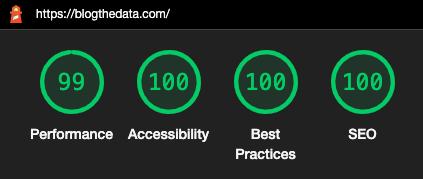
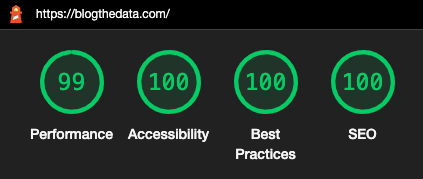
Recently ran a Google Lighthouse audit receiving an overall score of 91%. After making changes, it's now a near-perfect score!
Before
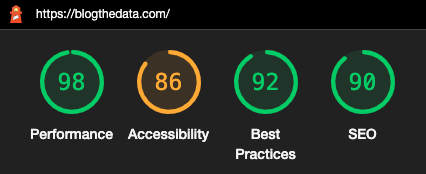
After
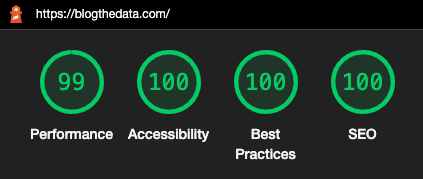
Here are the changes I made to boost my score:
1 - Add alt-text to images
Pretty straightforward. Find all <img> tags and include alt-text in each one. Alt-text is a key element for accessibility, allowing visual content to be read by screen readers.
It surprised me that Mailchimp, a 3rd party embedded subscription service, does not add alt-text to its referer banner. I will reach out to Mailchimp to ask why!
2 - Use 'natural' aspect ratios and explicit image dimensions
Several images had 'unnatural' aspect ratios; The width was out of proportion to the height. My profile picture was 64x54 resized within the html to be 64x64. Google didn't like it. I could either make the original image a perfect square, or stick with 64x54 - I took the easy route and just modified the resize params.
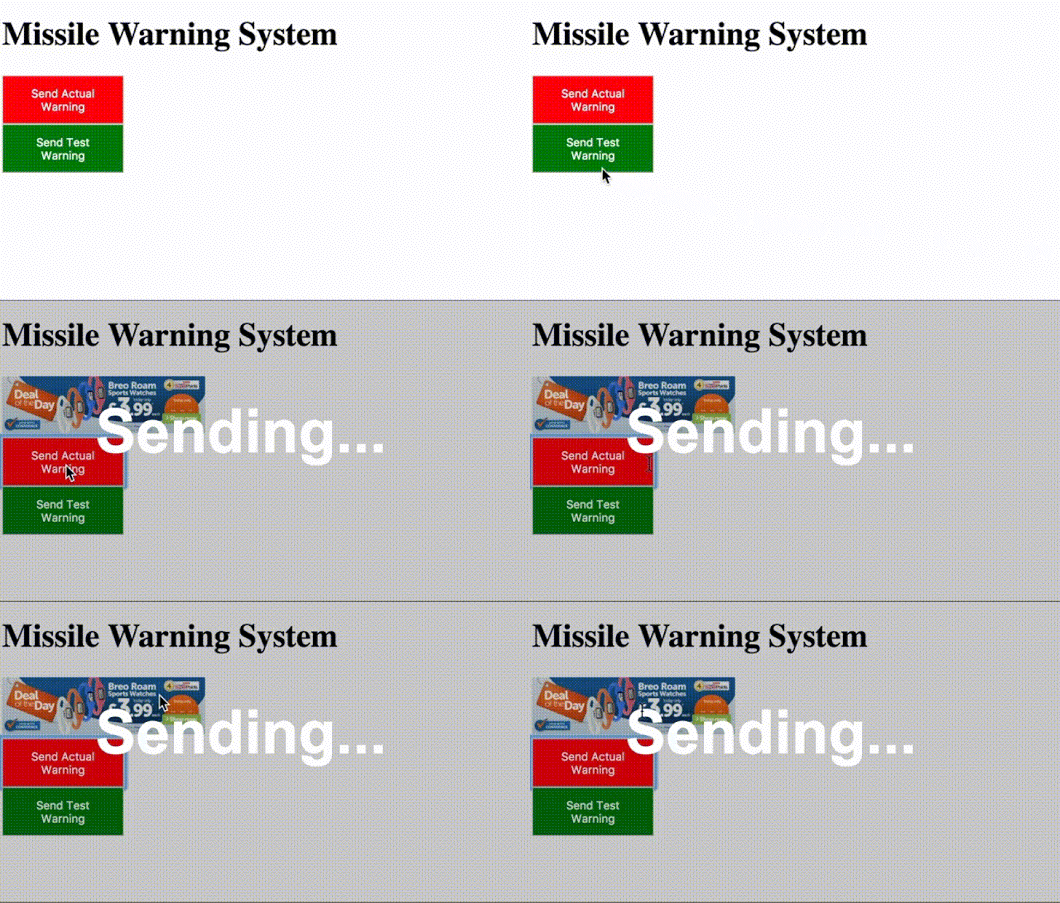
There were also images with no size attributes. With no explicit size, the browser 'shifts' the page to create room because it doesn't know how much space it will occupy on the page until render time. This increases your Cumulative Layout Shift (CLS), negatively impacting SEO.
Which reminds me of this GIF
3 - Minor UI changes
Added lang="en" to the html tag and adjusted componet colors to increase contrast. Check out the difference in my navbar!
Before

After (Higher contrast)

Run a Lighthouse audit on your site and see what you can improve!
Comments


Related Posts
 2 min read
Improve website accessibility by adding alt text, increasing contrast, implementing semantic HTML, using Figma wireframes, adding landmark elements, and more!
 2 min read
Improve website performance with Google Lighthouse Audit. Learn how to increase mobile and desktop scores for Performance, A11Y, Best Practices, and SEO.

0
 1 min read
Make your posts look beautiful on LinkedIn by using the Open Graph Protocol. Learn how to use the protocol and test it with social media post inspectors.
0

John Solly
A hands-on AI practitioner who transitioned to a CTO role to broaden my impact.
Most of my career has been dedicated to developing spatial systems at Esri, startups, and federal agencies. Currently, I lead technology strategy for Leidos' Health IT division, supporting agencies such as SSA, VA, and HHS.
My primary focus is the convergence of spatial computing and AI, enabling machines to interpret the physical world and applying these capabilities to meaningful missions.
Please reach out if you are interested in spatial systems or advancing AI within the federal government.
0